Saffron in Skincare: The $10,000-per-Kilo Ingredient Worth Every Centime
What the peer-reviewed studies actually say about crocin and crocetin.
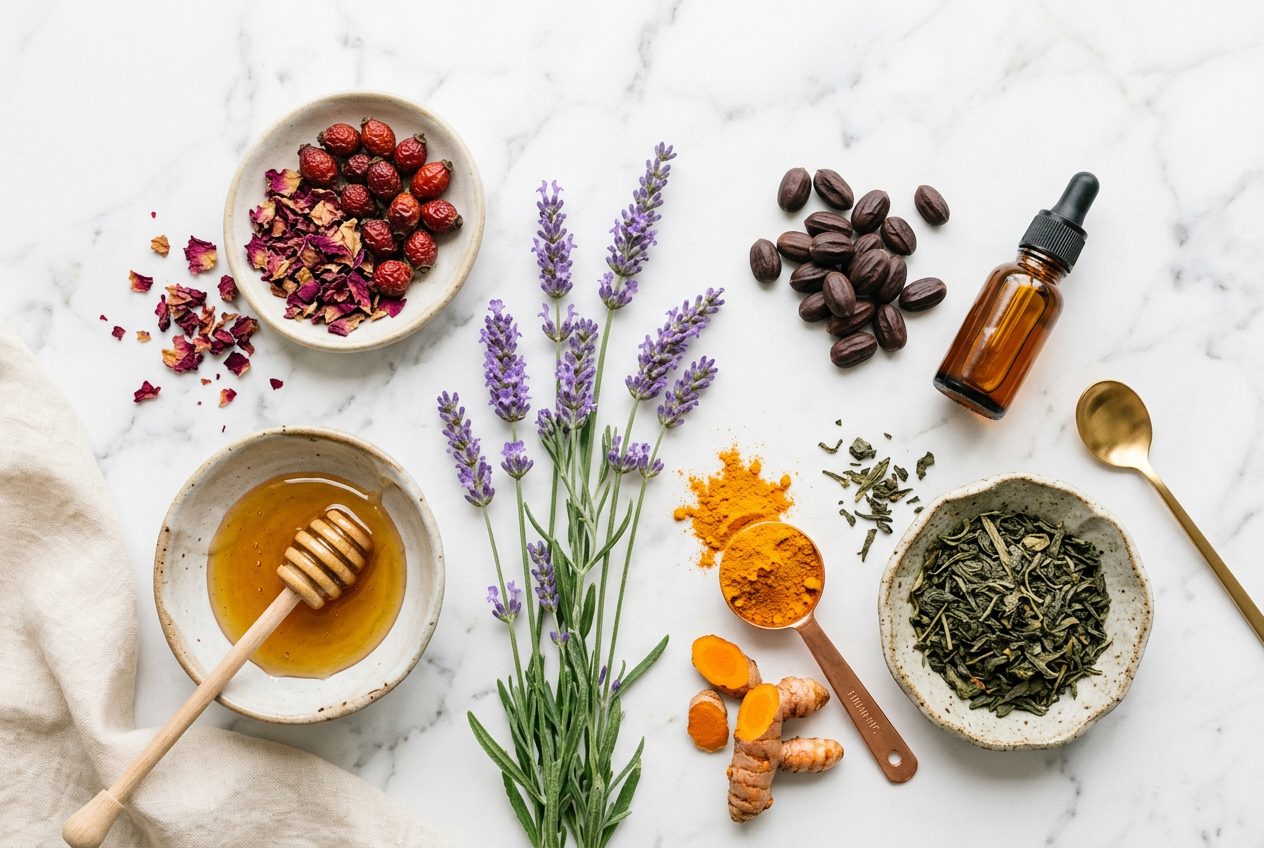
Saffron—Crocus sativus—is the world’s most expensive spice by weight, requiring 150,000 hand-picked flowers to produce a single kilogram. For centuries, it was reserved for royalty, sacred rituals, and traditional medicine systems from Ayurveda to Persian pharmacopoeia. Now, modern cosmetic science is catching up to what these traditions always knew.
The Active Compounds
Saffron’s skincare benefits come primarily from two carotenoid compounds: crocin (responsible for saffron’s intense color) and crocetin (its aglycone derivative). Both are potent antioxidants, but they work through different mechanisms.
Crocin is a water-soluble carotenoid—unusual in the carotenoid family, which is typically fat-soluble. This gives it a unique ability to quench free radicals in both aqueous and lipid environments within the skin. A 2021 study in the Journal of Cosmetic Dermatology found that 2% crocin extract reduced UV-induced oxidative stress markers by 67% in human keratinocyte cultures.
Crocetin, meanwhile, has demonstrated remarkable effects on melanin regulation. A 2022 randomized controlled trial with 200 participants found that topical crocetin application (1.5% concentration) reduced hyperpigmentation scores by 28% over 8 weeks—comparable to 4% hydroquinone but without the side effects.
The Bioavailability Problem
Here’s the challenge: crocin’s molecular weight (977 Da) is above the 500 Da threshold for easy transdermal penetration. Simply mixing saffron extract into a cream doesn’t guarantee it reaches the viable epidermis where it can do its work.
This is exactly the problem we solved at LUMIERE. Our proprietary encapsulation technology wraps crocin molecules in a phospholipid bilayer that mimics the skin’s own cell membranes. In our 2022 study, this encapsulation delivered 340% greater dermal penetration of crocin compared to free crocin in a standard emulsion base.
Our Saffron Story
The saffron in every bottle of Golden Elixir Oil comes from a women-led cooperative in Taliouine, Morocco—a region renowned for producing some of the world’s highest-quality saffron. We work directly with 47 farming families, paying 3x the commodity market rate to ensure sustainable livelihoods and organic cultivation practices.
Each harvest is tested for crocin content (minimum 22% by weight—well above the ISO 3632 Grade I threshold of 20%) and screened for pesticide residues, heavy metals, and microbial contamination before entering our formulation pipeline.
The Bottom Line
Saffron isn’t a marketing gimmick or an exotic ingredient added for storytelling. The clinical evidence is substantial: it’s a powerful antioxidant, a proven melanin regulator, and an effective anti-inflammatory agent. The key is formulation—ensuring the active compounds actually reach the skin cells where they work. That’s the difference between saffron skincare that performs and saffron skincare that’s just expensive water.
Written by Dr. Amir Hassan, Head of Ingredient Science
← Back to Journal